My husband and I lived in the same house, but we might as well have been roommates who split bills and shared a Wi-Fi password. Every day was the same script: coffee, dishes, his phone, my silence. If warmth was a setting, ours was stuck on “off.”
I got tired of begging for crumbs of attention, so I did something petty in the most polite way possible: I started writing prison pen pals. Not to “fix” anyone, not to be a saint, just to feel seen by somebody who could finish a sentence without scrolling.
Letters move slow, and that’s the point, they don’t buzz, vanish, or get buried under “k” replies, they show up and sit in your hands like proof someone meant it.
There’s a special kind of loneliness that happens in a shared house. Not the dramatic kind where someone storms out, slams doors, and yells your name like it’s a curse word. This is quieter. It’s when you live with a person who technically has a pulse, but emotionally feels like an end table you keep bumping into.
I didn’t want a scandal. I didn’t want a new husband. I wanted my husband to look up and actually see me. That’s it. The bar was so low it was basically a tripping hazard, and still, we found a way to limbo under it.
People call it emotional neglect, and it’s a real thing, even if the laundry still gets folded and the mortgage still gets paid. If you need language for what it looks like, this breakdown of emotional neglect in marriage hits uncomfortably close to home.
It was a regular weeknight, the kind that smells like dish soap and reheated leftovers. The TV talked louder than we did. The remote was basically glued to his hand, his thumb moving like it had a job to do.
I sat on the edge of the couch with my socks still on, because I hadn’t even made it to the “take off bra, become a house goblin” phase of the evening. I told him about my day, a small thing that felt big to me. A coworker had said something sharp, and I’d laughed it off like I always do, then replayed it in my head all afternoon like a broken voicemail.
“I think it actually hurt my feelings,” I said, trying to sound casual, like I wasn’t handing him a fragile little piece of myself.
He didn’t look away from the screen. “Huh.”
That was it. No follow-up. No “what happened?” No “are you okay?” Just that single grunt of acknowledgment, the sound you make when a microwave beeps and you want it to shut up.
I waited a beat, then another, like maybe my husband was buffering.
Nothing loaded.
My stomach did this awful little drop, like I’d missed a step going downstairs. I could feel heat creeping up my neck, that mix of embarrassment and anger that tastes like pennies. I wasn’t asking him to solve it. I wasn’t asking for therapy-level dialogue. I wanted a simple human moment, a hand on my knee, a “that sucks,” a look that said, I’m here.
Instead, I got the emotional equivalent of a blank wall, except the wall at least holds up pictures.
When I stood up to clear my plate, I realized I’d been eating around a lump in my throat. The fork scraped the ceramic too loudly, and I thought, So this is it. This is how you disappear while still living in your own life.
After that night, I went into full project-manager mode, because nothing says “romance” like a woman with a plan and a clipboard in her heart. I was convinced there had to be a combination of words, activities, and cleverly timed candles that would reboot him back into being my partner.
First came the self-help books. I stacked them on my nightstand like little paper therapists. I tried guided questions, those “tell me something you’ve never told anyone” prompts that sound intimate until you ask them next to a man eating pretzels over the sink.
I’d go first, trying to set the tone.
“I’ve been feeling lonely,” I’d say.
He’d nod like a customer service rep. “Sorry.”
Not sorry in a warm way. Sorry in the way people are sorry when you tell them the parking meter ate your quarters.
Then I tried date-night coupons. I literally made them. Construction paper. Markers. I was one glue stick away from becoming a middle-school guidance counselor.
Coupon ideas included:
It started the way most questionable hobbies start, late at night, in bed, with my husband asleep beside me like a human screen saver. I was scrolling with the sound off, holding my phone close like it might bite, when I hit a weird little rabbit hole: prison pen pals.
At first, it was pure curiosity. Part people-watching, part late-night “what is my life” spiral. I found myself on PenPals.Buzz, browsing profiles the way other women browse throw pillows. Age, location, even crime category, like I was shopping for a personality with a shipping delay. I told myself I was only looking, the same lie I tell in the Target parking lot.
And the thing is, the profiles were… human. Awkward. Funny. Sometimes too intense, sometimes weirdly sweet, and sometimes just really weird. A lot of them sounded lonely in a way I recognized. Not the same circumstances, obviously, but the same ache.
I didn’t go in with a mission. I went in because I missed being spoken to like I had a pulse.
Before I wrote a single word, I made rules, because I’m impulsive, not irresponsible. I wasn’t trying to start an affair-by-stamp. I was trying to feel like a person again without setting my whole house on fire.
Here’s what I wrote down for myself, in plain language, like I was making a safety manual for my own chaos:
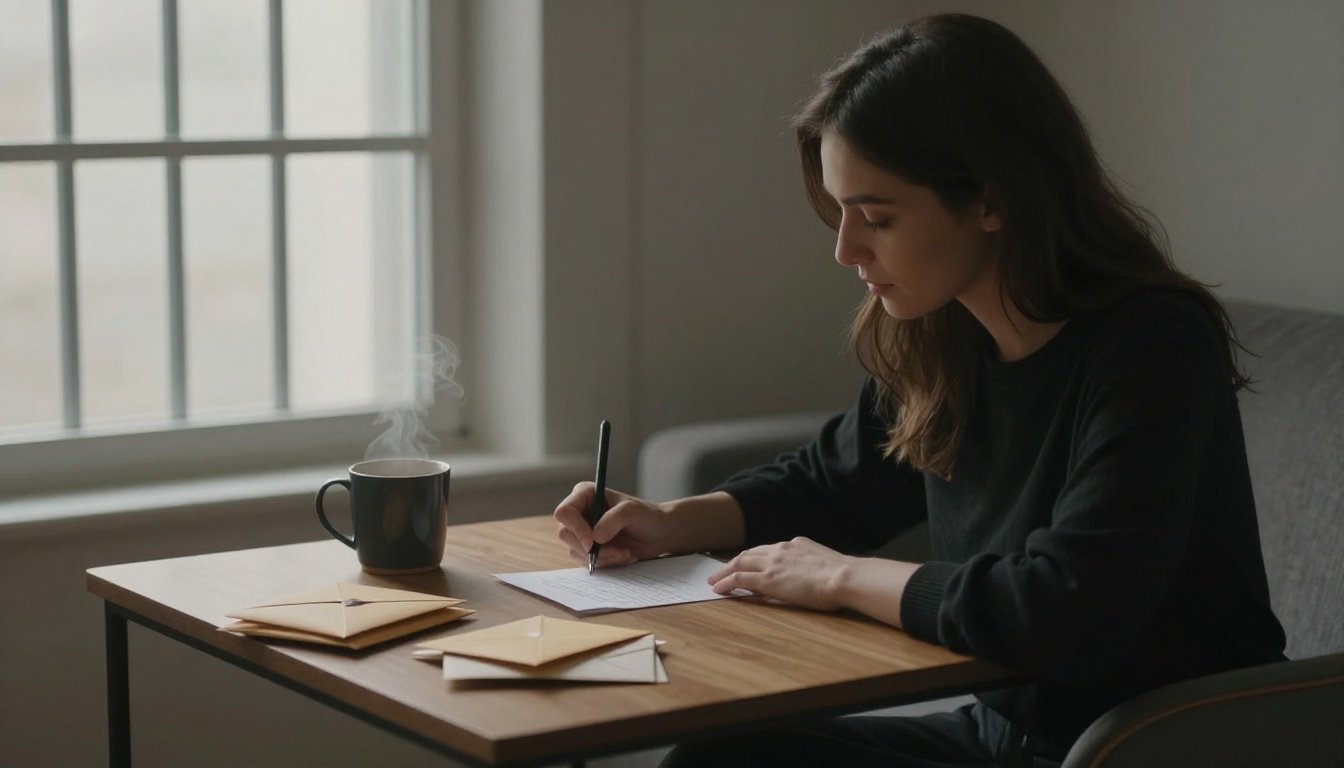
 The first time I sat down to write, I acted like I was forging a passport. I had a clean sheet of paper, a perfectly fine pen, and the nervous sweat of someone about to do something that would somehow get them arrested by the HOA.
My hand actually shook. Not a lot, but enough that I noticed. I stared at the blank page like it was going to judge me. In my head, I heard a dramatic narrator: Tonight, she commits the crime of… having a personality.
I kept thinking, What do I even say? “Hello, stranger, I’m lonely and married and eating string cheese over the sink?” Probably not.
So I went safe. Boring. Normal-human safe. I wrote the kind of things you’d put on a note to a coworker you don’t hate.
This is pretty much what I actually wrote (minus the parts where I crossed out half a sentence and panicked):
Hi,
I saw your profile and thought I’d say hello. I’m not great at small talk on paper, but I’ll try.
A few easy things about me: I like books (mostly the kind where someone solves a problem and nobody texts “k”). I cook the same five meals on repeat and pretend that counts as variety. Lately I’ve been trying to drink more water, and it’s going… medium.
What do you like to read? Any authors you always go back to? Also, serious question: if you could only eat one snack forever, what would it be?
Here’s a goofy one: what’s a “normal” thing people love that you just don’t get?
I hope you’re having an okay week. No pressure to write back fast, I know mail can be slow.
From,
(Me)
When I read it back, it felt almost too plain, like I’d sent a postcard from the island of Mild Opinions. But then something surprising happened: I felt relief.
On that page, I wasn’t “the wife who nags.” I wasn’t the woman trying to earn eye contact from a man who’d rather romance his phone. I was just a person, asking another person about books and snacks and the weird little details of a day.
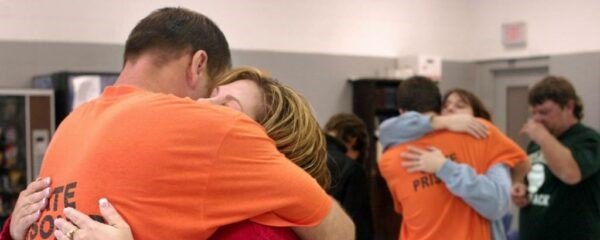
And yeah, I knew the bigger picture. Pen pal programs can reduce isolation for incarcerated people and improve well-being, which researchers and programs have been saying for years (here’s one accessible summary on how pen pals boost prisoner wellbeing). Sometimes those letters even turn into long friendships, and occasionally, marriages, in the broader pen pal world. I wasn’t trying to be a headline, though.
I just wanted to feel like my words landed somewhere other than the living room wall.
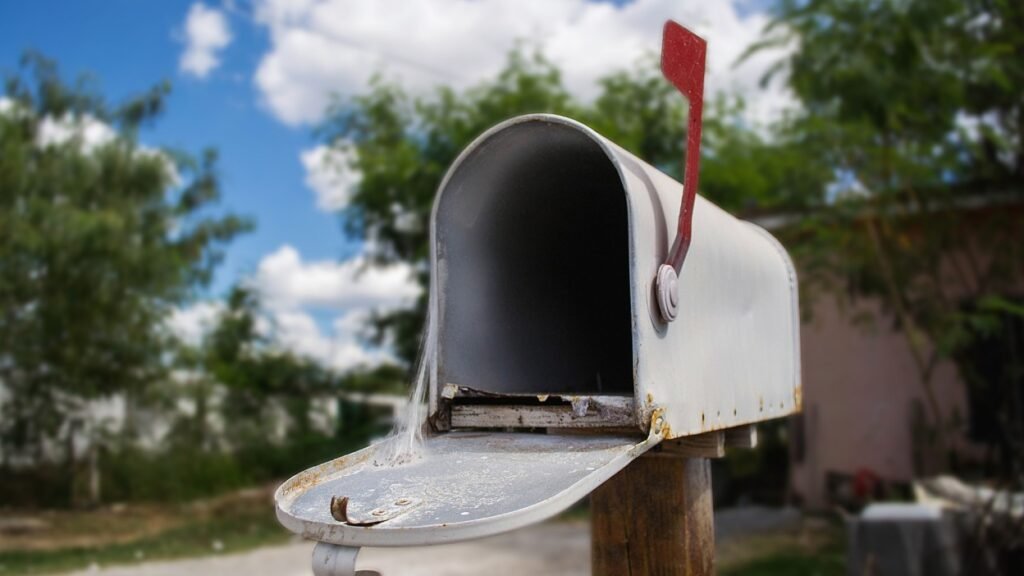
I didn’t expect my mailbox to become my favorite room in the house, but it did. Not because it was spicy or dramatic, it wasn’t. It was because the letters felt like a warm lamp in a cold kitchen, steady, ordinary, and weirdly comforting.
There’s a known truth in prison correspondence: consistent mail can ease isolation and give people something to hold onto, even when everything else is cement and routine (I found that spelled out clearly in this piece on pen pal programs and isolation). What surprised me was the other side of it. Those letters also gave me a place to land.
My pen pal remembered things that shouldn’t matter, but somehow did. Like the fact that I drink my coffee “aggressively hot,” or that my neighbor’s dog has a bark that sounds like a fax machine dying. He’d circle back a week later and ask, “Did you ever talk to your coworker again, or are we still acting like she’s a haunted doll?”
He didn’t just respond, he followed the thread. If I mentioned I slept badly, he’d ask what my brain was doing at 2 a.m. If my handwriting got tight and stabby, he’d call it out. Not in a therapist way, more like, “Your last letter had a vibe, you good?”
At home, my husband could watch me talk and still miss me completely. He’d give me that blank stare like his brain was doing a software update. Meanwhile, this guy in a cell could read my mood from the slant of my sentences.
To be fair, my pen pal wasn’t some flawless Hallmark hero. He could be moody. He could dodge questions. Sometimes he’d act like “accountability” was a word that gave him hives. But even on his annoying days, he was present. He showed up on paper, which was more than I could say for the man sitting six feet away on the couch.
We got funny by accident, the best kind of funny.
One week he wrote, dead serious, about “spread,” and I thought he meant gossip. I wrote back like, “I don’t have time for drama.” Turns out he meant commissary food you mix into a sad little snack soup. He replied, “Ma’am, I am talking about ramen, not rumors.” I deserved that.
Then we started arguing about gas-station snacks like it was a constitutional right.
I told him the best road trip food is Cool Ranch Doritos and a fountain Diet Coke. He said that was “outside-person privilege” and insisted the real champion is peanut-butter crackers because they don’t crumble under pressure, unlike “certain people” (me).
We also played chess by mail, which sounds classy until you realize it involves:
The laughter didn’t erase the hard parts. Sometimes the paper felt heavier than it should.
One letter showed up different. Less jokes, more quiet. He wrote about a family death he couldn’t attend, the kind of grief that just sits there because there’s nowhere to put it. He admitted he’d been feeling low for weeks, sleeping too much, then not sleeping at all. He didn’t dress it up. No “I’m fine.” Just the truth.
I read it twice, then a third time, because I wanted to respond like a human and not like a motivational poster.
I didn’t try to rescue him. I didn’t promise I could fix anything, because I can’t. What I did do was stay steady. I told him I was sorry, I told him I was listening, and I asked what helps him get through a day when his brain turns on him. I also encouraged him to talk to prison mental health staff or someone he trusts inside, because pen pals can sometimes spot when a person is sliding into a dark place, even from the outside. That’s not medical advice, it’s basic care.
The weird part was what it did to me. I learned empathy without turning it into a performance. I could hold his regret and still keep my boundaries. And in a way I didn’t expect, it made me softer at home too, not softer in a doormat way, softer in a “I remember other people have storms I can’t see” way.
Later, when I wanted to understand how common these intense pen pal bonds are (and what they cost emotionally), I read this open-access study on pen pals writing to death row. It made me feel less naive, and more intentional about why I kept writing.
I didn’t wake up one day with a new husband and a fresh playlist called “We Made It.” What changed was quieter than that. I stopped treating my loneliness like a personal flaw, and I stopped translating my needs into baby talk so nobody would feel accused.
Writing prison pen pals didn’t “save” my marriage. It did something more useful. It reminded me that my voice still worked, and that being seen isn’t a luxury item you earn by being easy to live with.
I waited until a normal evening, not after a fight, not after a silence that felt like a punishment. Just a plain Tuesday. Dishes done, TV off, his phone face-down on the table like a bribe.
I sat across from him and said, “I’m not doing this the way I used to.”
He blinked like he expected a speech with footnotes. I didn’t give him one.
“I feel lonely in our marriage,” I said. “Not sometimes. Not on bad weeks. I feel lonely most days.”
He started to do that thing where he turns it into logistics. “I work a lot. I’m tired. You know that.”
“I do,” I said. “And I’m still lonely.”
That was the moment I stopped softening it. No cute metaphors. No nervous laugh. No tossing him an escape hatch. I didn’t blame him for being a villain; I named what was happening like an adult calling a leak a leak.
“I miss being your friend,” I told him. “I miss you asking me anything real. I miss you noticing when I’m not okay. I don’t want to live like polite roommates who share a bed.”
He looked down at his hands. “So what, you want me to talk more?”
“Yes,” I said, “but not like a checkbox. I want you to care. I want effort that shows up when it’s boring, not just when I’m on the edge.”
I watched him swallow, then try to shrug it off. “I’m not good at feelings.”
“I’m not asking you to be good,” I said. “I’m asking you to be present. And if you can’t, I need us to be honest about what that means.”
There was no miracle fix. There was a long silence and a tired, “I didn’t know it was that bad.”
“I’ve been telling you,” I said, steady as a clock. “You just didn’t want to hear it.”
I had read enough to know this pattern has a name, and it’s common for one partner to wake up first and finally say the quiet part out loud (this guide on talking about emotional neglect helped me put words to it). The difference this time was I didn’t beg. I stated my needs, and I stated my limit.
Then I said the line that changed the air in the room: “I’m booking a couples therapy appointment. You can come with me, or I’ll go alone. But I’m not doing another year like this.”
I used to think love had to feel like a movie scene, candles, chemistry, some magical look across the kitchen island. When that didn’t happen, I assumed something was wrong with me. Maybe I was too needy. Maybe I talked too much. Maybe I wasn’t “low-maintenance” enough to keep.
Now I think love is a lot less sparkly, and a lot more sturdy.
Love can look like:
I started this story feeling unloved by my husband, the kind of lonely that shows up even when someone is sitting right there. Writing prison pen pals did not turn me into a saint, it turned me back into a person. One slow letter at a time, I found laughter, honesty, and a weird little pocket of self-respect that I had been handing out like free samples.