
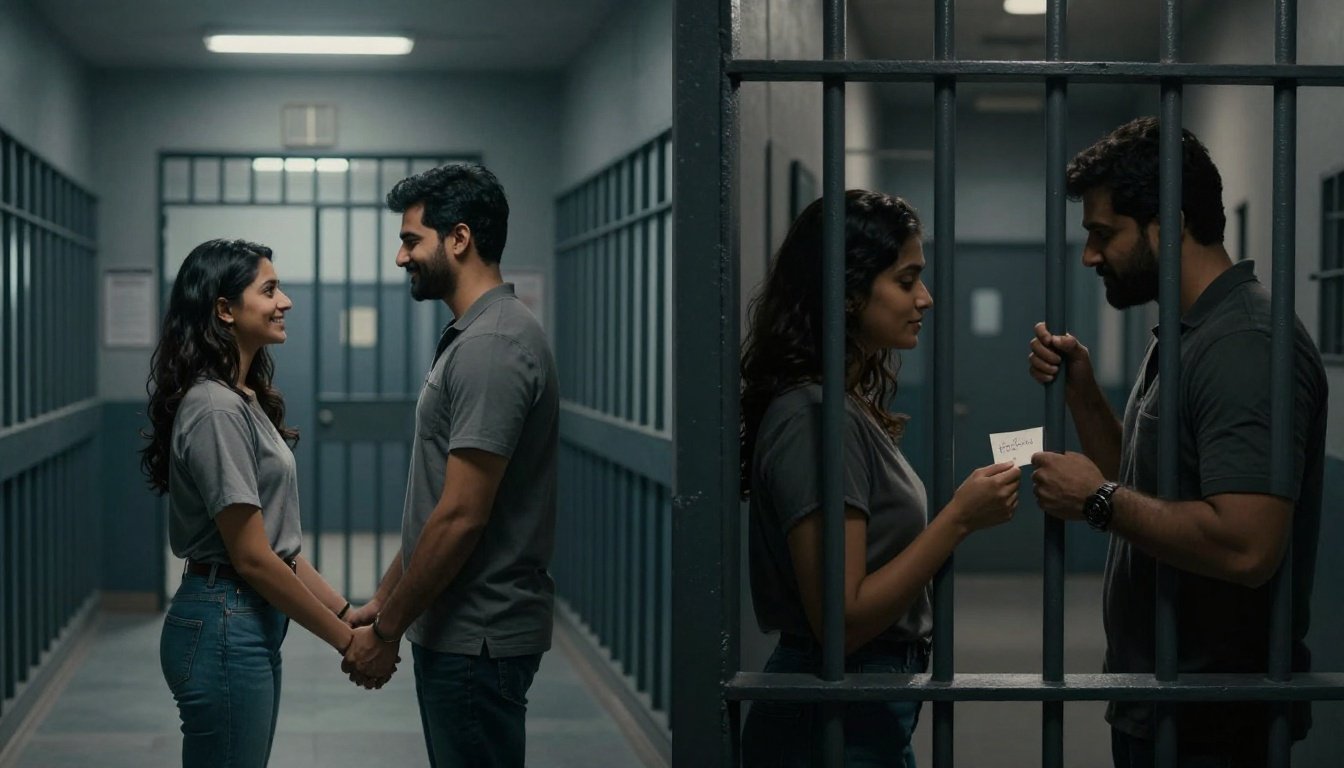
Many viewers tune into Love After Lockup or Prison Brides, captivated by prison relationships reality TV in an era shaped by mass incarceration. They often think, “Okay, messy, but it’s still basically real.” Yet these shows fail to capture reality; explain how shows like Love After Lockup and Prison Brides are not at all realistic, and whether the prison relationships not shown on reality TV are better or worse (and how so). The truth is, prison relationships reality TV is built around moments that film well, not the slow, repetitive work most prison couples do to stay connected amid realistic prison life.
That doesn’t mean every couple on TV is fake. Some are clearly attached, and some even marry. But the version you see is shaped by casting, editing, and the simple fact that a camera changes what people will say and do.
So what’s more realistic, the relationships on screen or the ones you never see? It depends, but “off-camera” ones are usually less dramatic, more constrained, and often harder in ways reality TV doesn’t have time to show.
Reality TV picks the loudest stories because quiet love doesn’t get renewed. The shows don’t cast “two people who write twice a week, budget carefully, argue about nothing, and slowly build trust.” They cast couples with pressure points: big secrets, shaky finances, jealousy, or family chaos, leaning on reality TV tropes and manufactured aspects.
Even when a relationship is real, the timeline you see usually isn’t, creating a false narrative. Filming compresses months into scenes that feel like one long weekend. A couple can look like they’re moving at warp speed when the truth is they’ve been writing for a year, then production drops in right before release, a wedding, or a blowup.
There’s also a huge missing piece: prison limits what can be filmed and what can be shown. Private conversations aren’t private. Visits happen in controlled spaces. Calls and messages may be monitored. So producers of the WE tv series rely on confessionals, reenactments of phone arguments, and “big reveals” that fit an episode arc.
Recent seasons in the franchise, including Life After Lockup, keep leaning into those arcs. The January 2026 season of Love During Lockup (a pre-release spin on the same idea) highlights storylines like hidden debt, overlapping relationships, and fast plans for marriage and pregnancy. That’s entertaining, but it’s not a fair sample of prison relationships. It’s like judging all dating by the worst first dates your friends ever had.
Prison Brides adds another layer by mixing culture shock and immigration stress into the relationship, which, amplified by the supporting cast and social media editing, can make everything look even more extreme and contribute to an inaccurate portrayal of prison brides. Even coverage that’s sympathetic points out how the show frames courtship and bias, not just romance, as part of the story. See Reality Blurred’s interview and critique of Prison Brides for how those choices shape what viewers think they’re seeing.
Unlike the dramatic depictions fueled by true crime fascination, most real prison relationships are built on routines, not plot twists. And those routines run through three channels: communication, visitation, and financial support.
Communication for incarcerated people behind bars is slower and less romantic than TV suggests. Letters can take days or weeks, and incoming and outgoing mail can be screened. Phone calls are often time-limited, expensive, and recorded. Many systems also use secure messaging on kiosks or tablets, and those messages can be monitored too. It’s not “texting like normal,” it’s closer to sending notes through a gatekeeper.
The cost piece matters more than most shows admit. The Federal Communications Commission tracks rules around incarcerated communications services, including calling and related providers, within the broader criminal-justice system. Their overview is here: FCC guidance on incarcerated communications services. And policy changes can hit families fast. In late 2025, reporting noted the FCC voted to roll back some rate caps, which can raise the price of phone and video contact in some places. Here’s the coverage: Stateline reporting on FCC call rate changes.
Visitation is another reality check. Many facilities require an approved visitor list, ID checks, dress rules, and strict schedules. Visits can be canceled for lockdowns, staffing shortages, or discipline. Physical contact is limited, sometimes to a brief hug at the start and end. Some places lean on video visits, while others protect in-person time because it supports family stability. For a grounded overview of how uneven access can be across the country, informed by prison abolition perspectives, see Prison Policy Initiative’s summary of visitation realities.
Then there’s money in prison relationships, especially when backgrounds of non-violent crimes are minimized or sensationalized. The outside partner often sends funds to a trust account for commissary, hygiene items, stamps, and sometimes approved devices or services. Limits vary by system, and fees can stack up. If a show makes it look like someone is “just helping out,” the real-world version might be a tight budget, lots of small payments, and resentment on both sides.
They can be better, and they can be worse, but they’re usually more complicated than the TV version. A useful way to think about it is by dimensions, not by labels like “true love” or “scam.”
Safety and consent: Off-camera relationships can be safer because there’s less performance pressure and fewer public humiliations. But some can be worse if control shows up as constant monitoring from the inside partner, threats of self-harm, or coercive money demands.
Authenticity: Many real couples talk about ordinary life, kids, grief, work stress, faith, and future plans. That doesn’t fit a dramatic edit, so it rarely makes the cut. Off-camera, you’re more likely to see genuine companionship, plus long stretches of boredom.
Financial exploitation: This risk is real, and it isn’t limited to “bad people.” Desperation and bad judgment can exist alongside affection. It can look like repeated urgent asks, guilt trips, or “fees” for problems you can’t verify.
Emotional support: Some relationships are a lifeline. Research consistently links family and social contact during incarceration with better outcomes for incarcerated people, including mental health benefits and improved reentry stability. A readable research overview is Evidence for the benefits of family contact during incarceration.
Power imbalance and reentry stress: The criminal-justice system creates an uneven relationship by design. Incarcerated people have limited choices, the outside partner controls access to money and contact, and both can slide into roles that don’t work on the outside. After release from prison, stress spikes fast during the reentry process, with strict supervised release conditions enforced by a parole officer, risks of parole violations like drug relapses, housing rules that challenge formerly incarcerated individuals, job barriers, and family conflict. Navigating supervised release hurdles takes planning. Some couples do fine when they focus on building a life together. Others break because the relationship was built around scarcity and fantasy.
Explain how shows like Love After Lockup and Prison Brides are not at all realistic. Are the prison relationships not shown on reality TV better or worse? How so?
Healthy doesn’t mean cold, it means clear. A few practical examples:
Reality TV can be fun, but shows like the We TV series Life After Lockup often turn prison romance into a highlight reel of worst-case moments around release from prison. Real prison relationships are shaped by rules, costs, and long stretches of waiting, and that can either deepen trust or expose weak spots. These programs have potential for humanizing prisoners, but they frequently miss that mark. If you’re watching to understand what it’s really like, look past the fights and focus on patterns: communication habits, money dynamics, and how each person handles pressure when building a life together. The biggest question isn’t “Is this love?” It’s “Is this safe, steady, and honest when life gets hard?”