
I’m a straight guy, and I’ve had the same worry you’re having: if I write a male prisoner, will he assume I’m gay, or that I’m looking for something romantic?
Here’s the bottom line: it’s OK to be a pen pal to male prisoners, and in most cases, it won’t be read as a sexual thing unless you make it sexual. Many incarcerated men want something simple, a normal friendship, a link to life outside, and proof they still matter to someone.
Still, stereotypes make men overthink male-to-male connection. So I’m going to keep this practical. I’ll cover what prisoners usually expect, how I keep my tone clear, the boundaries that protect me, the red flags I take seriously, and what I say when other people make it weird.
What male prisoners usually want from a pen pal (and what they don’t)

Most men inside aren’t looking for romance from a stranger. They’re looking for something closer to what a lot of us want after a rough week: someone to talk to, someone who listens, someone who treats them like a person.
From what I’ve seen across prison pen pal sites and volunteer programs, the common reasons are pretty basic:
Boredom is a big one. Prison time moves slowly. A letter gives the day some shape.
Loneliness is another. Even if an inmate has people around him, he can feel isolated. Letters can be a small relief from that.
A pen pal can also be a connection to the outside world. That matters when your whole life is locked behind schedules, rules, and walls.
Some men want to practice writing and communication. Others want to talk about work, sports, books, faith, or family. A lot of them want to feel normal again, even for ten minutes, because normal is what prison takes away.
I also keep in mind a bigger reason: almost everyone in prison gets out someday. Stronger ties to the outside can support that transition. Some programs and recent reporting even claim lower reoffending rates for people who keep steady outside connections, though numbers vary and it’s hard to prove cause and effect. Either way, human contact rarely hurts.
Friendship is the default, but you should still watch for romantic signals
Friendship language usually sounds like: “How was your week?” “Tell me about your kids.” “I’ve been reading…” “What music do you like?” It feels like a normal conversation.
Flirty language often shifts fast. For example: “I’ve never felt this connection before.” “You’re all I think about.” “You’re the only one who understands me.” Sometimes it turns into pet names or sexual talk.
That doesn’t mean the person is “bad.” It means he’s looking for something different than I am. Also, attraction can happen in any direction. What matters is that I choose what I’m comfortable with, and I say it out loud.
Why the “they’ll think I’m gay” fear shows up in the first place
This fear usually isn’t about prison at all. It’s about the old stereotype that any close male-to-male bond must be sexual. That idea trains men to keep emotional distance, then calls it “masculinity.”
Prison pen pals also carry extra stigma. People assume inmates are always scheming, or that writing them is “weird.” Because of that, guys sometimes treat it like a secret hobby, which makes it feel more suspicious than it is.
I’ve learned to reframe the whole question. This is less about sexuality and more about confidence and boundaries. If I write like a normal person, and I keep my limits clear, most people read it exactly that way.
How I can write a male prison pen pal without mixed signals
If I’m worried about being misread, I don’t try to “hint” at what I mean. I just say it kindly, once, then write like myself. That alone clears up 90 percent of the anxiety.
I also keep the tone steady. If I write like a buddy, it reads like a buddy. If I write like a late-night love letter, it reads like that too. Prison mail gets boring fast, so it’s easy for people to latch onto emotional intensity. A calm tone helps both of us.
Shared-interest topics make this easier. Sports, fitness, learning, business ideas, faith, books, current events, and family stories all create connection without romance. Even simple stuff works, like talking about your job, a hobby you’re learning, or a meal you cooked.
Say what I’m looking for in the first letter, and keep the tone steady
These lines are direct, polite, and hard to misread. I’d drop one or two into my first letter and move on.
- “I’m looking for a respectful pen pal friendship and good conversation.”
- “Just so it’s clear, I’m straight and I’m not looking for romance.”
- “I’m happy to write about everyday life, goals, and what keeps us going.”
- “I’m into sports, work, family stuff, and books, so I’d enjoy those topics.”
- “If you’re looking for steady, normal letters, I can do that.”
Notice what I’m not doing. I’m not overexplaining. I’m not acting offended. I’m setting the frame, then continuing like a regular guy.
Set boundaries early: money, gifts, photos, pet names, and personal details
Boundaries don’t need a speech. They need a plan. Here’s the quick version of what I set, and why it matters.
Before you start, it helps to decide where your lines are. This table covers the common pressure points.
| Boundary area | My default rule | Why it matters | What I say if it comes up |
|---|---|---|---|
| Money, gift cards, “help” | I don’t send money | Money changes the relationship fast | “I don’t send money or gift cards, but I can keep writing.” |
| Gifts and packages | I skip it unless I’m sure and rules allow | It can become an expectation | “I keep it to letters, I hope that’s OK.” |
| Photos and selfies | One normal photo is fine, lots is not | Too many photos can blur intent | “I’m not big on photos, but I’m glad to write.” |
| Pet names and flirty talk | I don’t respond in kind | It encourages more of it | “I’m here as a friend, so I keep it respectful.” |
| Personal info and social media | I don’t share fast | It protects my privacy | “I’m not sharing social media or my address, letters work best.” |
When I say no, I keep it calm and drama-free. Long explanations invite negotiation. A simple “I don’t do that” is cleaner.
If I’m clear early, I don’t have to “fix” a confusing vibe later.
Safety, privacy, and red flags I should take seriously
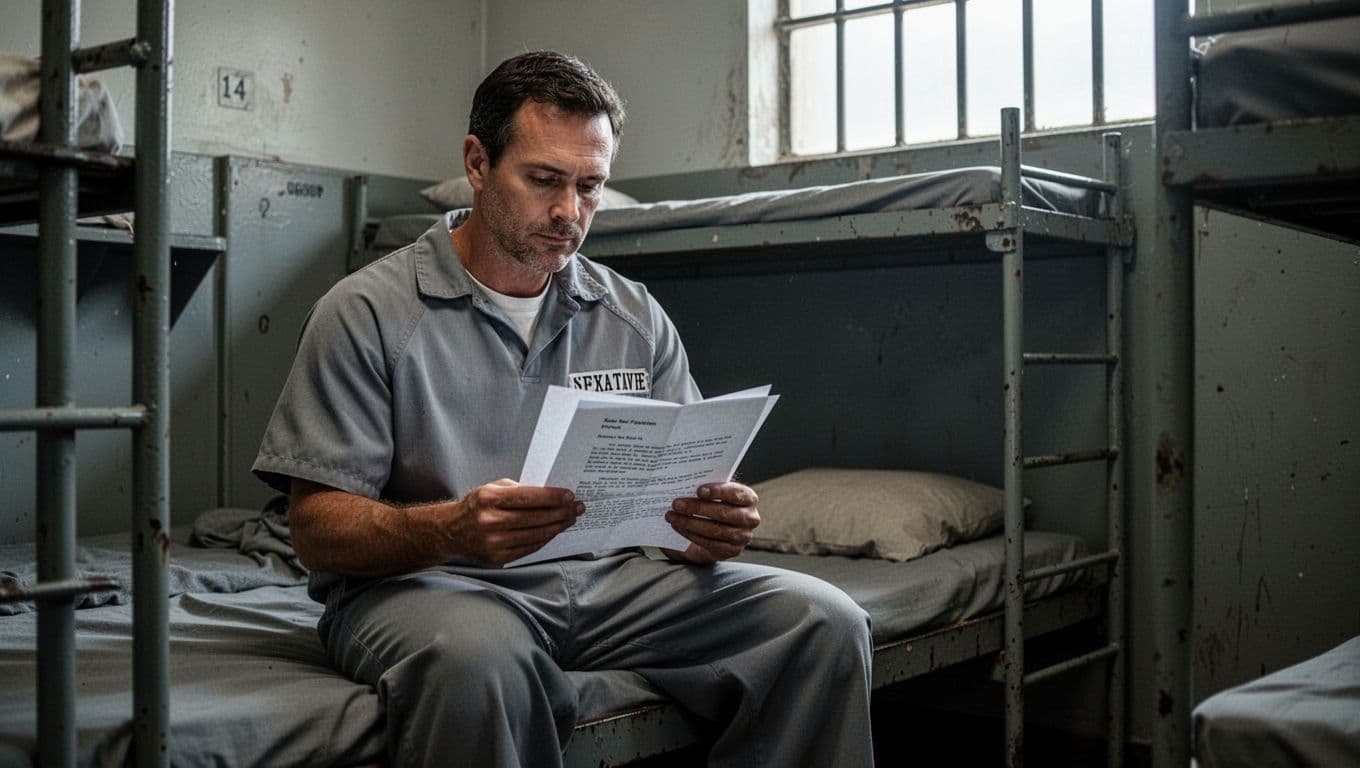
I can care about someone and still protect myself. Those two things don’t conflict.
First, I accept a basic truth: prison pen pal connections are real, but prison is also full of need. Some men will reach for help in ways that aren’t healthy for me. So I keep privacy as the default until trust is earned.
Also, prison mail isn’t private in the normal sense. Facilities often screen mail. Some places have strict rules about paper type, stickers, perfume, and photos. So I read the facility’s rules before I send anything, because returned letters can create confusion and frustration on both sides.
Do a quick background check, understand the mail rules, and protect my identity
I start with verification. If I’m using a pen pal site, I cross-check the inmate’s name and ID number with the official corrections locator when I can. If the profile lists the facility, I look up that facility’s mail policy.
Next, I protect my home address. A PO box is the simplest option. If that’s not possible, a mail-forwarding service can add a layer of separation, depending on what’s available where I live.
Finally, I assume my letters could be read. Because of that, I don’t share sensitive details. I avoid banking info, work access details, travel schedules, and anything that could put me at risk. I also hold off on sharing my social media, since that can reveal my location, friends, and daily routines fast.
Red flags that mean I should slow down or stop writing
Most pen pal exchanges stay friendly. Still, I watch for patterns that signal pressure or manipulation. If I see these, I slow down or end it:
- Fast emotional intensity: “You’re all I need,” very early on.
- Money requests: cash, gift cards, “phone money,” “help with fees.”
- Secrecy pressure: “Don’t tell anyone we write,” without a good reason.
- Boundary pushing: asking for my address after I said no.
- Sexual talk: after I’ve clearly framed it as friendship.
- Guilt trips: “If you cared, you’d do this.”
- Threats or anger: any intimidation ends it for me.
- Rule-breaking requests: anything that involves smuggling, scams, or “just this once.”
If I decide to stop, I keep the exit line short:
“I don’t think this pen pal connection is a good fit for me, so I’m going to step back. I wish you well.”
Then I stop replying. No debate, no back-and-forth.
What to do if friends or family make it weird
This part surprised me. The inmate usually isn’t the biggest issue. Other people’s jokes are.
Some guys hear “prison pen pal” and instantly go to sex, danger, or both. Others think any letter between men must be about attraction. That’s their filter, not mine.
I remind myself why I’m writing. I’m choosing to treat someone with basic respect. That fits my values. If somebody wants to turn that into a middle-school insult, I don’t have to carry it.
A simple way to explain it without overexplaining
When I do talk about it, I keep it short. These are a few lines I’ve used, depending on who I’m speaking to:
“I’m just writing letters. It’s a normal pen pal friendship.”
“I care about rehabilitation and staying connected to real life.”
“It helps someone stay grounded, and it costs me a stamp.”
If someone wants a debate, I don’t take the bait. A calm tone ends most of those conversations. If it doesn’t, I share less.
How I decide what I share, and what I keep private
I use a simple rule: if a person is respectful, I can share the basic idea. If they joke, judge, or push for details, I keep it private.
Privacy doesn’t mean I’m ashamed. It means I’m protecting something personal. It also protects my pen pal. He might not want his name passed around at a barbecue, and I get that.
In a strange way, this has been good for my own sense of masculinity. I’m not “proving” anything by avoiding male friendships. I’m proving something by being steady, clear, and decent, even when it’s not cool to be.
Conclusion: Writing a male prisoner doesn’t define my sexuality
Being a straight male pen pal to a male prisoner is fine. It doesn’t make me gay, and it doesn’t have to create mixed signals. What matters is how I write, what I allow, and what I protect.
Before I send that first letter, I run a quick mental checklist: my purpose, a steady tone, clear boundaries, privacy basics, and awareness of red flags. Then I start small and see how it feels.
If you’re on the fence, write one letter. Keep it respectful, keep it simple, and trust your gut if anything feels off.