
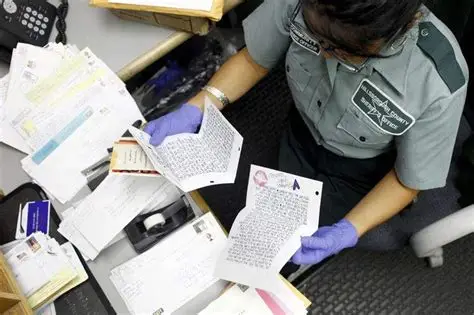
For most adults in 2025, a letter might not seem like much. For someone on the inside, though, inmate mail is proof they haven’t been erased. And for families of the over 2 million men and women incarcerated in America, postal mail is often the only affordable way they can regularly keep in touch with their locked up loved ones.
Over the past decade, postal mail between inmates and their loved ones became increasingly difficult to send and receive. You see, there’s this new trend among DOCs to stop processing inmate mail at their own facilities, and instead outsource it to private companies, often thousands of miles away. They claim this reduces drugs from entering the facilities (but recent studies reported in Prison Legal News have shown this isn’t the case, an in fact, many facilities reported MORE drug overdoses AFTER the mail scanning procedures were implemented).
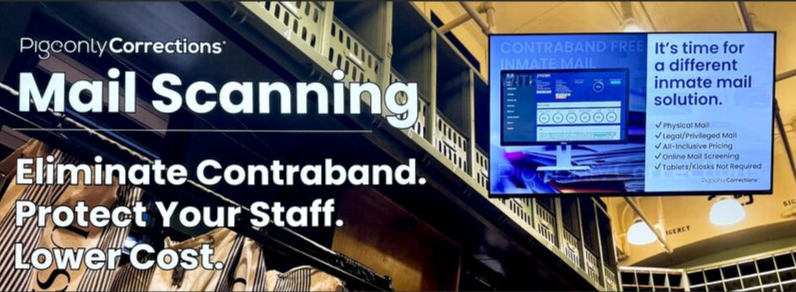
Utah was one such state to jump on the mail-scanning bandwagon (on January 1, 2025). They were drawn in by an ad such as the one shown above. However, they recently reversed course, which we feel deserves the utmost praise. They were the first DOC to admit their mistake and take proactive steps to fix it. We reached out to Karen Tapahe, the Public Information Officer at the Utah DOC, and here’s what she had to say:
“In January 2025, the Utah Department of Corrections (UDC) implemented a new mail delivery process for our correctional facilities, principally to curb the flow of incoming contraband. The Department contracted an outside service, Pigeonly, to process incoming mail, scan and print copies of letters in accordance with policy, and deliver them to our facilities.
Unfortunately, after several months of using Pigeonly, numerous issues developed, including the primary concern of delays in delivering mail to our incarcerated individuals. Incidents were noted by our staff, incarcerated individuals, and their loved ones. As a result, UDC met with stakeholders and attempted to address the concerns with the vendor
It eventually became apparent that the third-party solution would not work for us, as the department began setting up its own processing system at our correctional facilities. Starting January 5, 2026, UDC will begin processing incoming mail itself. We are confident we can address the prevention of contraband in the mail and keep it from entering our facilities, and the mail will reach its intended recipient much more quickly.“
We were quite pleasantly surprised by this and truly impressed. People were being heard. Inmates were listened to. Their families were listened to. And while most DOCs might “listen” but refuse to take action, we applaud Utah for actually doing something proactive to fix the problem.
Let’s back up and talk about “mail scanning” in more details. In many prison systems, a private company (such as TextBehind or Pigeonly) receives mailed letters, opens them, scans the pages, then prints copies for delivery inside the prison (or emails them to the inmates’ tablets or a shared kiosk in the prison dayroom). Many have limits (such as 2 pages maximum, no photos allowed, etc). The originals may be stored for a period of time or destroyed, depending on policy. On paper, it sounds efficient. In real life, it can create distance, long delays, and distrust.
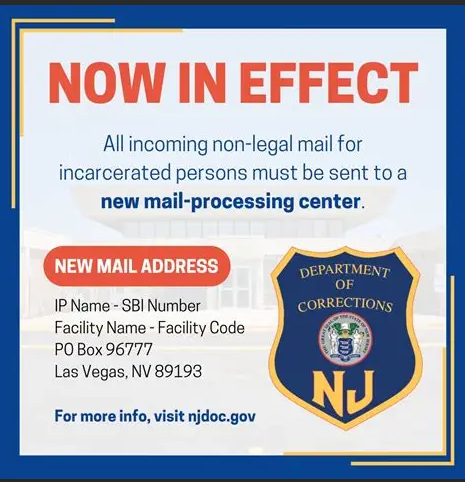
As an example, as of 2025, all mail to New Jersey inmates must be sent to an address in Nevada, where it is scanned (often poorly, with entire sentences cut off or with the entire document so blurry it’s unreadable). Then it’s forwarded back to the inmate’s tablet. Sometimes this process can take weeks, even months, until the mail is actually received. And by then, it’s old news. Texas adopted this mail-scanning procedure years ago, and many other states have followed suit. But Utah is the first, to our knowledge, to reverse course. Their DOC choosing to take back control is a smart, humane shift that can protect privacy, speed up delivery, rebuild confidence, and improve connections between incarcerated men and women and their loved ones. In doing so, Utah will help improve inmates’ chances for success both in and out of prison.
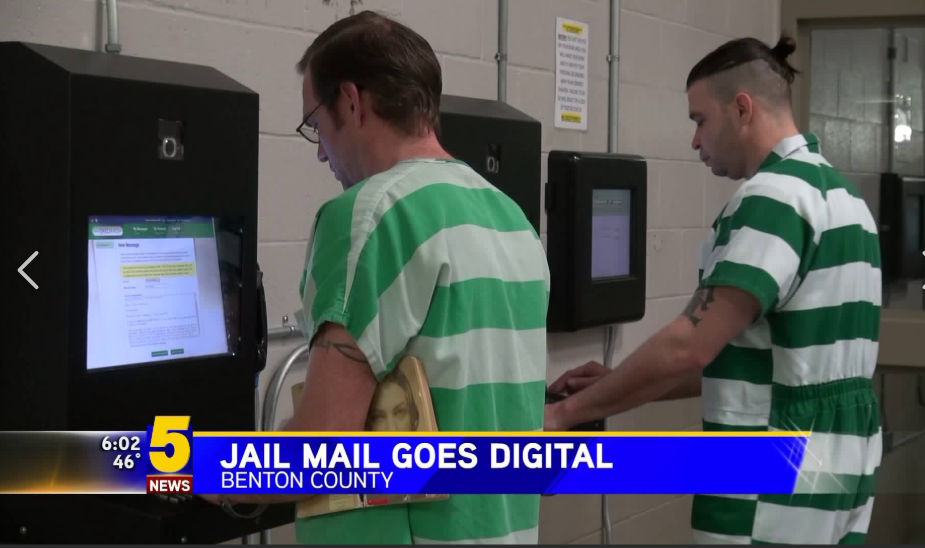
For a pen pal website, like PenPals.Buzz, these new procedures from Texas, Arizona, Florida, and numerous other states DOCs, have created a huge disruption. When a new pen pal writes to an inmate, it can now be months until the message is received. Some of our clients don’t even want to receive postal mail and ask instead for the pen pal to just give out their phone number, or sign up on their email messaging service and send them a short text. While this can be more convenient, faster, and less expensive, it also drastically eliminates the personal touch of a handwritten letter. Where someone may have previously sent a 10-page handwritten letter, pouring their heart out, now they’re limited to 5 or 6 sentences on a poorly-built app such as GTL / GettingOut. Instead of prisoners feeling connected to someone, feeling cared for and thought about, and having an intellectual exchange of thought and ideas, it’s turned into a text-fest on a crappy prison email system that will be happy to charge you a $5.00 service fee just for the pleasure of spending money with them…and then have the audacity to ask you if you’d like to “round up.” Salena Witmer, a female in Indiana (and penpals.buzz user) who writes dozens of prison inmates, stated on a recent episode of the Prison Pen Pal Podcast, “I wish I could round down, not up.” We concur.
The move toward third-party mail scanning did not happen overnight. It grew in waves, pushed by fear of contraband, staff shortages, and the promise of faster screening.
A simple timeline view helps explain how it spread:
The “why” was easy to sell. The “how it feels” was harder to measure. And that’s where many systems ran into trouble.
Here are examples that have been widely reported and discussed in public-facing policy changes and agency communications:
That list is not meant to be exhaustive. It’s meant to show a clear pattern: this approach became common enough that states began treating it like the default. Utah stepping away from that default is the point.
When state agencies outsourced inmate mail, the pitch usually sounded reasonable:
Stop drugs on paper: Staff have raised concerns about substances introduced through mail, including paper that appears normal.
Reduce staff workload: Centralized processing can shift daily labor away from facility mailrooms.
Lower contraband risk: Less physical paper moving inside means fewer hiding places for banned items.
Standardize screening: One processing center can apply one set of checks.
Create records: Scanned mail creates a stored copy, which some agencies view as helpful during investigations.
Those promises sound good in a meeting. But results have been terrible. Even when contraband prevention improves in one narrow area, the human costs can be heavy, and the “efficiency” often shows up as delays and frustration for families, leading to angrier inmates and higher recidivism. Plus, it’s believed that most contraband enters facilities through staff and during visitation, not through the mail.
If you want to understand why Utah’s change matters, picture a letter as a bridge. Outsourcing added extra toll booths, extra stops, extra chances for the bridge to sway (or even break).
When a vendor handles personal mail, the process becomes a pipeline: send to a facility, ship to a processing site, scan and queue, print, then ship or route to the prison for delivery. Each step is another place for time to slip and for mistakes to land on the wrong person.
The losses were not abstract. They showed up in small, painful moments:
A child sends a hand-drawn birthday card and it arrives weeks after the date.
A family prints photos for a proud milestone and the person inside receives dark, unclear copies or none at all, and realizes the original was destroyed.
A letter meant to calm someone down after a hard phone call lands too late to help.
Even when nothing goes “wrong,” the message can feel flattened. A copied letter emailed to a tablet just isn’t the same as the real thing.
Third-party scanning creates delays in ways most people don’t see until they live it. It’s not just postal time. It’s postal time plus shipping to the vendor, plus a scanning queue, plus printing time, plus internal delivery.
Common complaints in systems that used outsourced scanning have included:
People inside often describe it as being stuck listening through a wall. You can hear something, but it’s muffled, and you can’t tell what got lost along the way. And families become frustrated as often their entire letter will be returned, often with a couple words written on the envelope like “Refused. Doesn’t follow guidelines” or “Wrong Facility Code” or any number of infractions that tells family members, even though you spent hours writing this handwritten letter, we didn’t want to waste 5 seconds to attempt to route this to your loved one. They have better things to do. Refused. Refused. Refused. Try again next time. You are the weakest link. Goodbye.
Personal mail is where families share the things they don’t post online. Health updates. Money stress. Parenting struggles. Grief. Recovery. Hope. When that gets scanned by a third party, trust changes.
Families worry about who can access scanned images, how long they are stored, and whether they can be shared outside the facility’s immediate needs. Could a staff member leak their letter on social media? Even if a vendor has policies, the fear is real because the control is not in the family’s hands.
That fear creates a chilling effect:
People write less.
They avoid sensitive topics.
They stop sending photos.
They choose short, bland notes that don’t support real connection.
Legal mail raises an even sharper concern. Personal mail and legal mail are often handled under different rules, and legal communications can have added protections. Still, when families hear “everything is scanned,” they can worry that boundaries are not being respected. The result is not just anger, it’s people pulling back from contact because they don’t feel safe sharing.
It’s easy for an agency to adopt a trend. It’s harder to admit a trend didn’t work well enough for the people who live with it every day.
Utah’s decision to process inmate mail in-house signals a few things at once:
This is not a “soft” move. It’s a responsible one. In-house processing still allows screening, still allows rules, and still allows enforcement. What it changes is who owns the result.
When something goes wrong, there’s no maze of vendors, shipping logs, and “not our department” replies. The public can hold Utah DOC to clear standards, and Utah DOC can actually meet them. And we fully believe they will.
When inmate mail is handled within the corrections system, tracking becomes more direct. A family doesn’t have to guess whether a letter is stuck at the post office, stuck in a vendor queue, or lost during re-routing. The department can build a straight line from receipt to delivery.
That matters because mail problems are rarely dramatic. They are death by a thousand paper cuts. A missing photo here, a late letter there, a rejected envelope with no clear reason.
With in-house processing, Utah DOC can:
Set timeliness standards: Not “as soon as possible,” but actual expectations.
Train staff to handle mail with care: Photos and drawings are not contraband, they’re memories.
Respond to questions with real answers: Families deserve to know what happened, not just that “the system processed it.”
Audit mistakes: Patterns can be spotted and fixed, instead of repeated.
When the department owns the mailroom process, it owns the duty to get it right.
People tend to talk about inmate mail as if it’s sentimental. It is, but it’s also practical. Connection to family can help a person keep a routine, manage stress, and stay grounded in who they want to be after release.
Better mail processing supports:
No one should pretend mail alone fixes a prison system. But steady communication is a stabilizer, like a handrail on a steep staircase. It doesn’t remove the steps, it helps people keep their footing.
Bringing mail processing back in-house is the right call. Now the goal is to make it work in a way families can feel week to week, not just on paper.
A good system does two things at once: it screens for real safety risks, and it treats communication as a normal human need.
Families don’t need perfect. They need predictable.
Utah DOC can build trust quickly by setting plain service goals and reporting whether they’re being met. A few examples that most people can understand:
Delivery time targets: Publish a typical range for standard personal mail from receipt to delivery, and update it if there’s a backlog.
Clear rejection notices: If mail is rejected, send a notice that says what rule was triggered, what item caused it, and what the sender can do next.
A simple appeal path: Mistakes happen. People should have a way to request review without hiring a lawyer.
One place to ask questions: A web form, a dedicated email address, or a phone line that’s staffed with people trained to answer mail questions.
Transparency does not require sharing sensitive security details. It just means publishing basic, non-invasive stats in plain language, such as:
When the numbers are public, performance becomes real, not rumor.
In-house does not mean careless. It means Utah DOC can write rules that fit Utah, then enforce them with consistency.
A balanced approach can include:
Staff training with clear checklists: The goal is consistent screening, not random enforcement.
Careful handling of photos and kids’ artwork: These items carry emotional weight, and they can be inspected without being treated like trash.
Defined limits that make sense: If the department needs limits on paper type, stickers, or other items, the rules should be easy to find and easy to follow.
Extra care for legal mail: Legal communication is not the same as personal mail. Policies should keep that line bright, with staff trained to follow it every time.
Honest rules about originals: If originals can be kept and delivered, that is often best for families. If there are cases where originals can’t be kept, Utah DOC should say so clearly and explain why, so families aren’t left guessing.
The goal is simple: screen what needs screening, and protect the parts of mail that make it human.
Inmate mail is not just paper. It’s the voice of a parent, the patience of a spouse, the pride of a child, and the quiet reminder that a person still belongs to someone.
Utah DOC deserves praise for choosing to process inmate mail in-house, because it takes honesty to change course and responsibility to take the work back. If Utah can listen, adjust, and improve, other states can take a hard look at their own mail scanning contracts and ask a basic question: are we protecting safety while also protecting connection?
Families will notice what happens next, one letter at a time.



One Response
I think inmate penpals are good thing for the most part